Claude Monet (1840–1926) Exhibition Collection
French Impressionism • Argenteuil & Giverny (1875–1906)
Claude Monet spent his life chasing something that refuses to hold still: the way light shifts across water, grass, and clouds from one hour to the next. Working outdoors rather than in a studio, he traded smooth academic blending for quick, visible touches of unmixed color that let the viewer’s eye do the blending from a few steps back.
Drawn from the National Gallery of Art, The Metropolitan Museum of Art, and the Art Institute of Chicago, these three paintings follow Monet across thirty years. They begin on a breezy summer hill in Argenteuil with Camille and their young son Jean, move to the arched wooden footbridge he built at Giverny in 1899, and culminate in his 1906 water study where the shoreline disappears altogether.
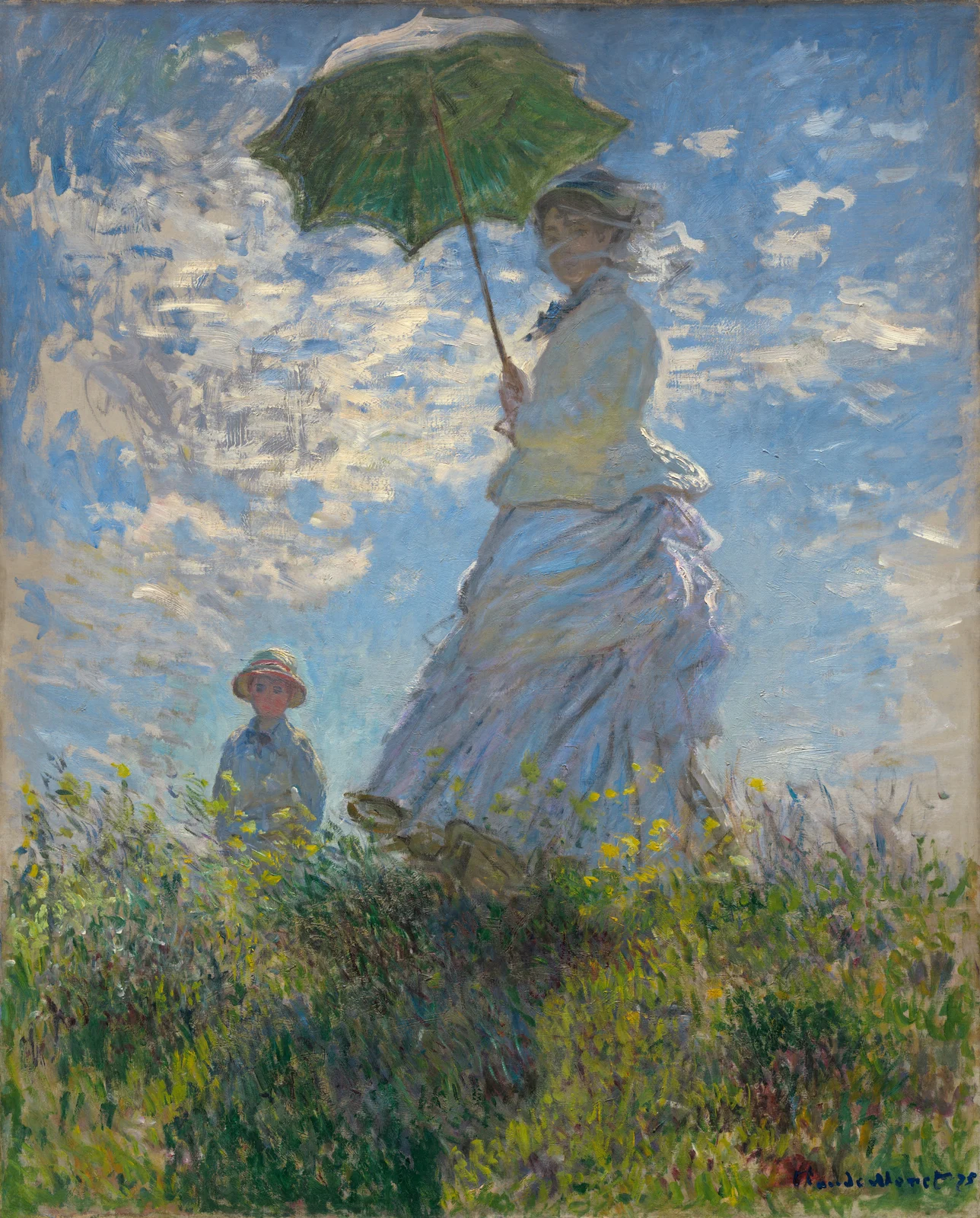
Woman with a Parasol - Madame Monet and Her Son
Claude Monet (1875)
A defining manifesto of French Impressionism, this open-air masterwork abandoned studio convention to capture the fleeting sensation of wind and sunlight in a single sitting. By positioning the easel below the horizon line, a radical upward perspective monumentalizes an ephemeral family stroll against the sky. Instead of traditional dark grays, chromatic shadows of violet, green, and blue reflect upward from the sun-drenched meadow, while rapid, unblended brushstrokes convey the living pulse of a summer breeze.
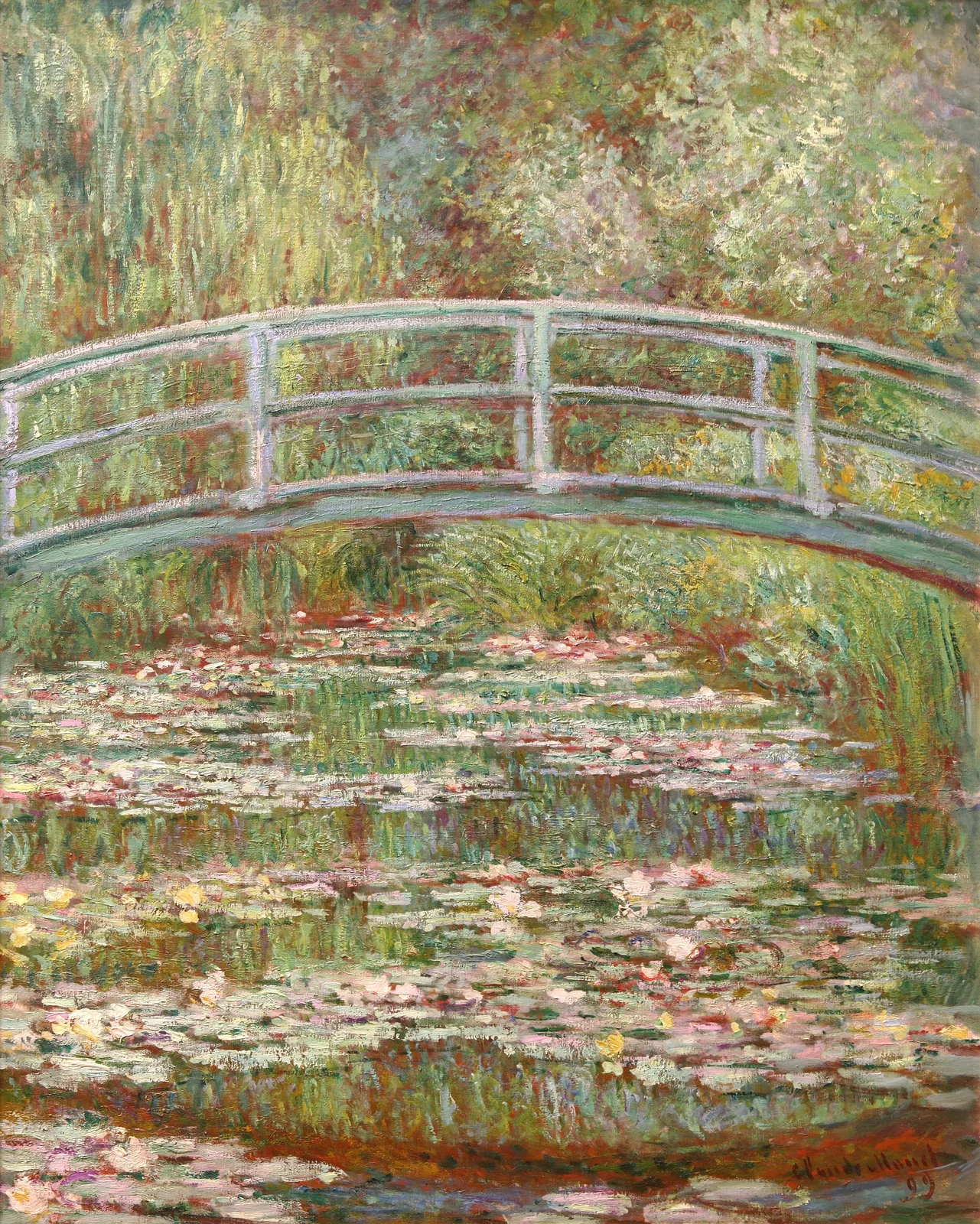
Bridge over a Pond of Water Lilies
Claude Monet (1899)
Epitomizing mature French Impressionism, this meditative canvas dissolves the traditional boundary between architecture, water, and reflection. By eliminating the upper sky and adopting a balanced square format, the composition transforms a cultivated garden into an all-over tapestry of light that directly foreshadowed twentieth-century abstraction. Across its heavily worked surface, layered strokes of emerald, lavender, and rose alternate between horizontal dabs on the pond and vertical cascades in the foliage to make stillness shimmer.
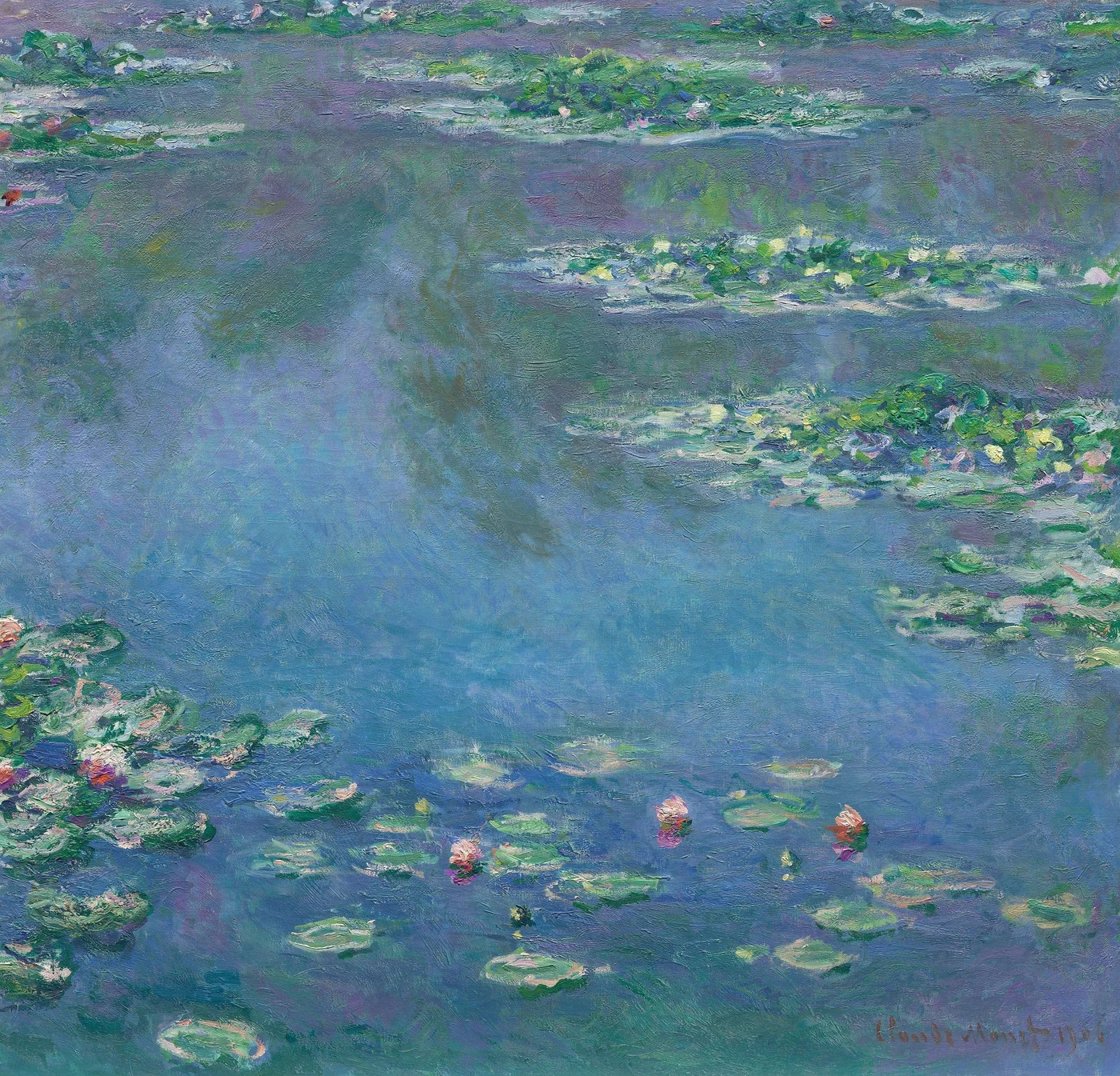
Water Lilies
Claude Monet (1906)
A radical milestone of late French Impressionism, this immersive canvas abandons traditional landscape conventions to explore pure reflection, color, and optical sensation. By eliminating both the rocky shoreline and the overhead sky, the composition transforms the surface of the pond into an all-over field of floating blossoms that directly anticipated twentieth-century Abstract Expressionism. Built from layered, scumbled brushwork of cobalt, violet, and viridian, the water simultaneously reflects the unseen clouds above while anchoring the eye in tranquil depth.
Looking for another painting by Claude Monet?
We can turn any archival artwork into a double-sided canvas tote bag, ceramic mug, throw pillow, hardcover journal, or ornament, complete with a custom-researched wall plaque on the back.