French Impressionism (1874–1906) Collection
Claude Monet • Pierre-Auguste Renoir • Edgar Degas • Gustave Caillebotte
When a group of independent painters staged their own exhibition in photographer Nadar’s Paris studio in April 1874, critics mocked their unfinished look as mere "impressions." Instead of painting mythological heroes under studio skylights with dark brown glazes, these artists took portable easels into suburban gardens, train stations, rehearsal rooms, and rain-slicked Paris intersections.
This six-painting group brings together the sun-drenched outdoor studies of Claude Monet and Pierre-Auguste Renoir alongside Gustave Caillebotte’s wide-angle view of Haussmann’s newly rebuilt boulevards and Edgar Degas’s off-center, tightly cropped study of ballet dancers at the Paris Opéra.
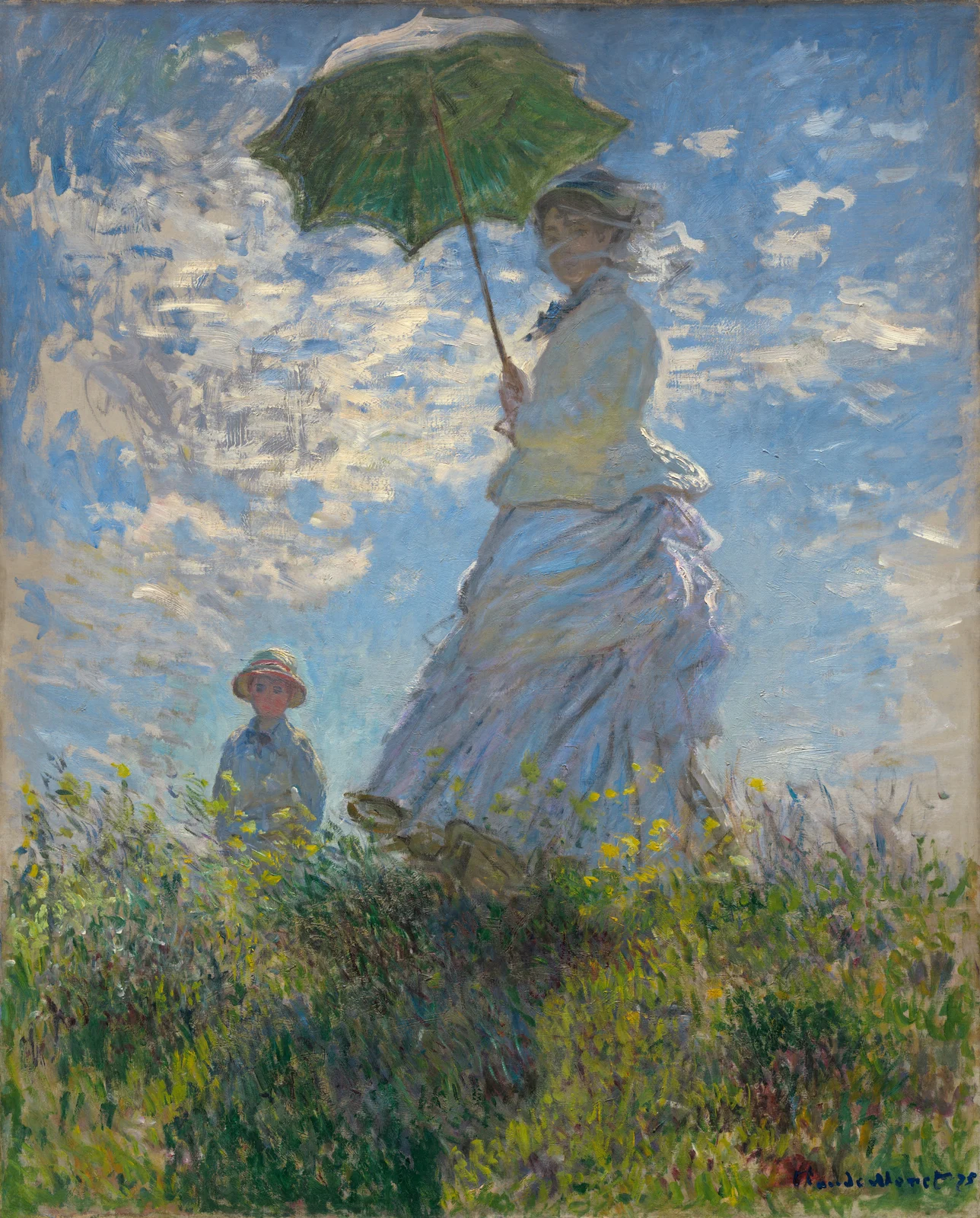
Woman with a Parasol - Madame Monet and Her Son
Claude Monet (1875)
A defining manifesto of French Impressionism, this open-air masterwork abandoned studio convention to capture the fleeting sensation of wind and sunlight in a single sitting. By positioning the easel below the horizon line, a radical upward perspective monumentalizes an ephemeral family stroll against the sky. Instead of traditional dark grays, chromatic shadows of violet, green, and blue reflect upward from the sun-drenched meadow, while rapid, unblended brushstrokes convey the living pulse of a summer breeze.
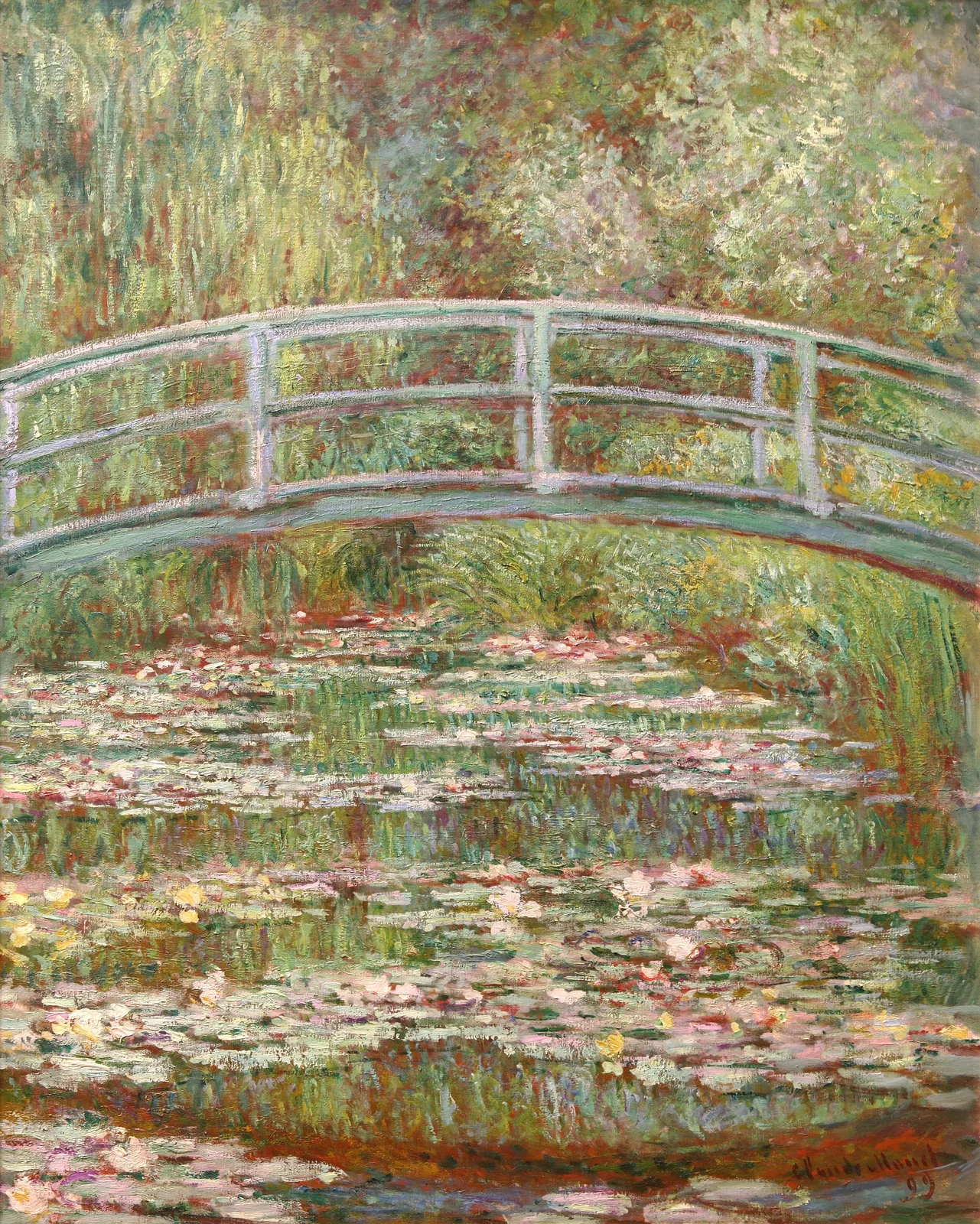
Bridge over a Pond of Water Lilies
Claude Monet (1899)
Epitomizing mature French Impressionism, this meditative canvas dissolves the traditional boundary between architecture, water, and reflection. By eliminating the upper sky and adopting a balanced square format, the composition transforms a cultivated garden into an all-over tapestry of light that directly foreshadowed twentieth-century abstraction. Across its heavily worked surface, layered strokes of emerald, lavender, and rose alternate between horizontal dabs on the pond and vertical cascades in the foliage to make stillness shimmer.
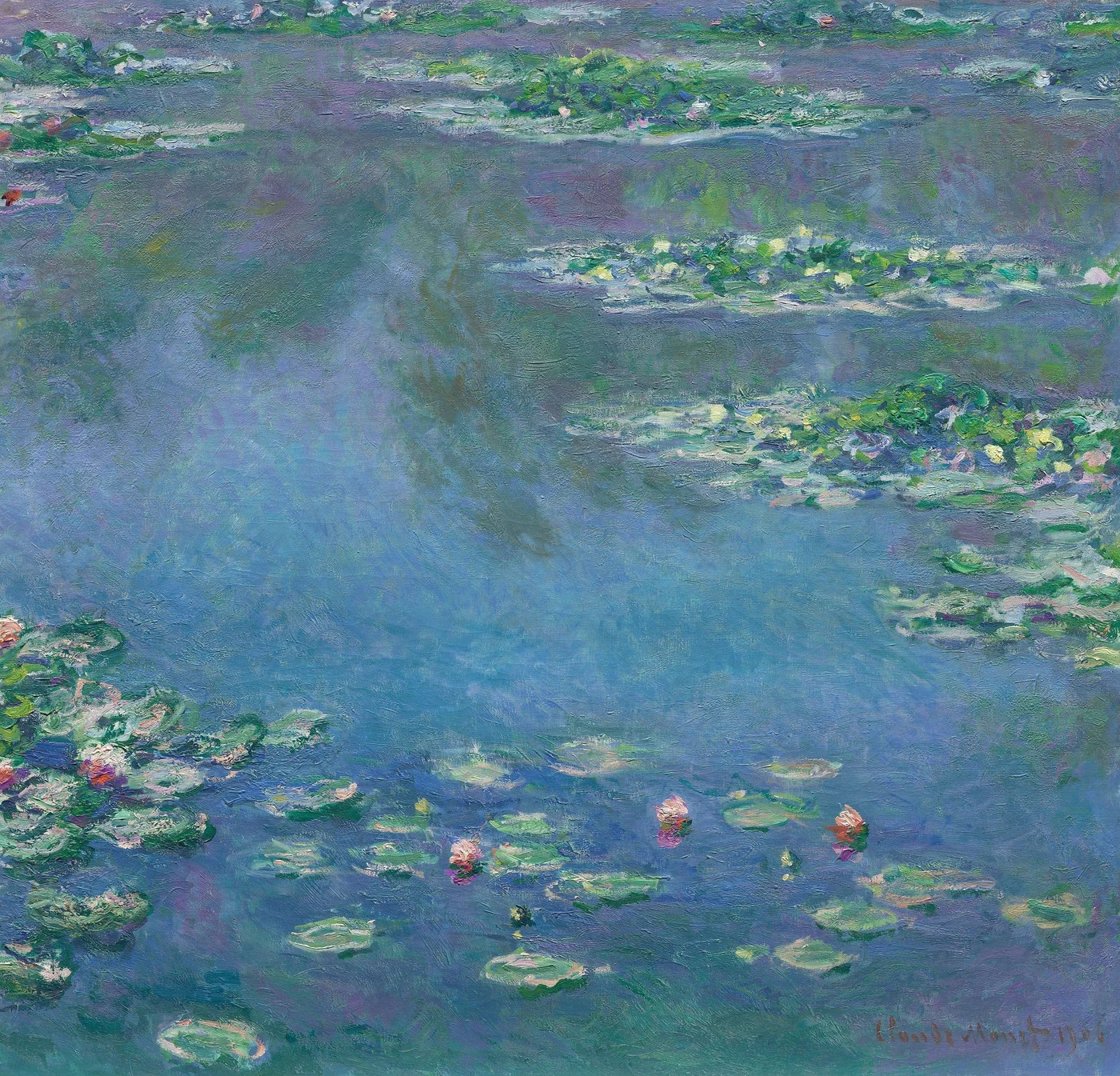
Water Lilies
Claude Monet (1906)
A radical milestone of late French Impressionism, this immersive canvas abandons traditional landscape conventions to explore pure reflection, color, and optical sensation. By eliminating both the rocky shoreline and the overhead sky, the composition transforms the surface of the pond into an all-over field of floating blossoms that directly anticipated twentieth-century Abstract Expressionism. Built from layered, scumbled brushwork of cobalt, violet, and viridian, the water simultaneously reflects the unseen clouds above while anchoring the eye in tranquil depth.
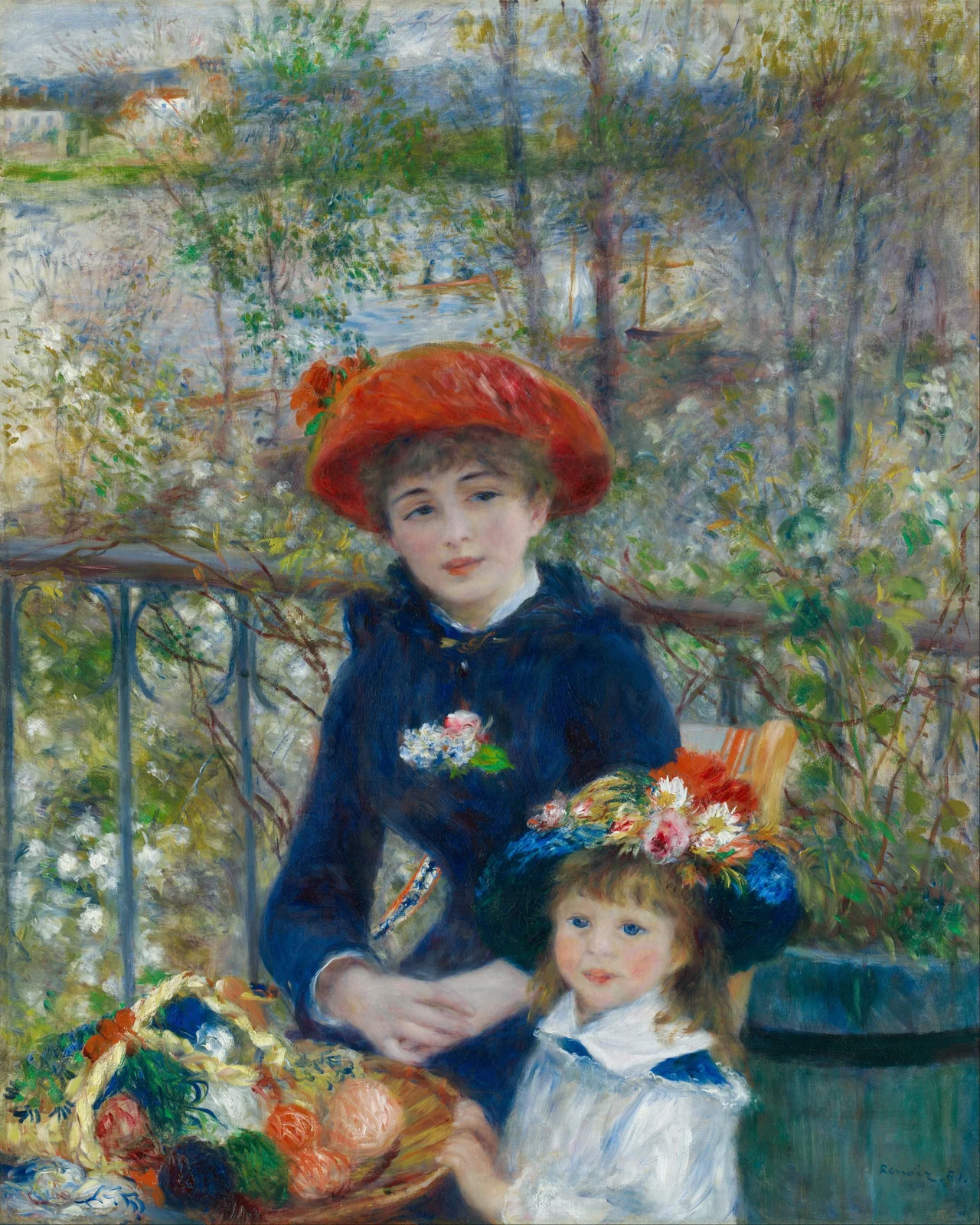
Two Sisters (On the Terrace)
Pierre-Auguste Renoir (1881)
Celebrated as a tour de force of French Impressionism, this radiant canvas is a masterclass in the orchestration of color, texture, and outdoor light. Rather than relying on dark shadows to model depth, the composition builds volume through vibrant chromatic contrast and atmospheric perspective. A striking duality of brushwork defines the surface, pairing porcelain-smooth academic precision on the figures’ faces with feathery, unblended strokes in the river foliage that blend optically in the viewer’s eye.
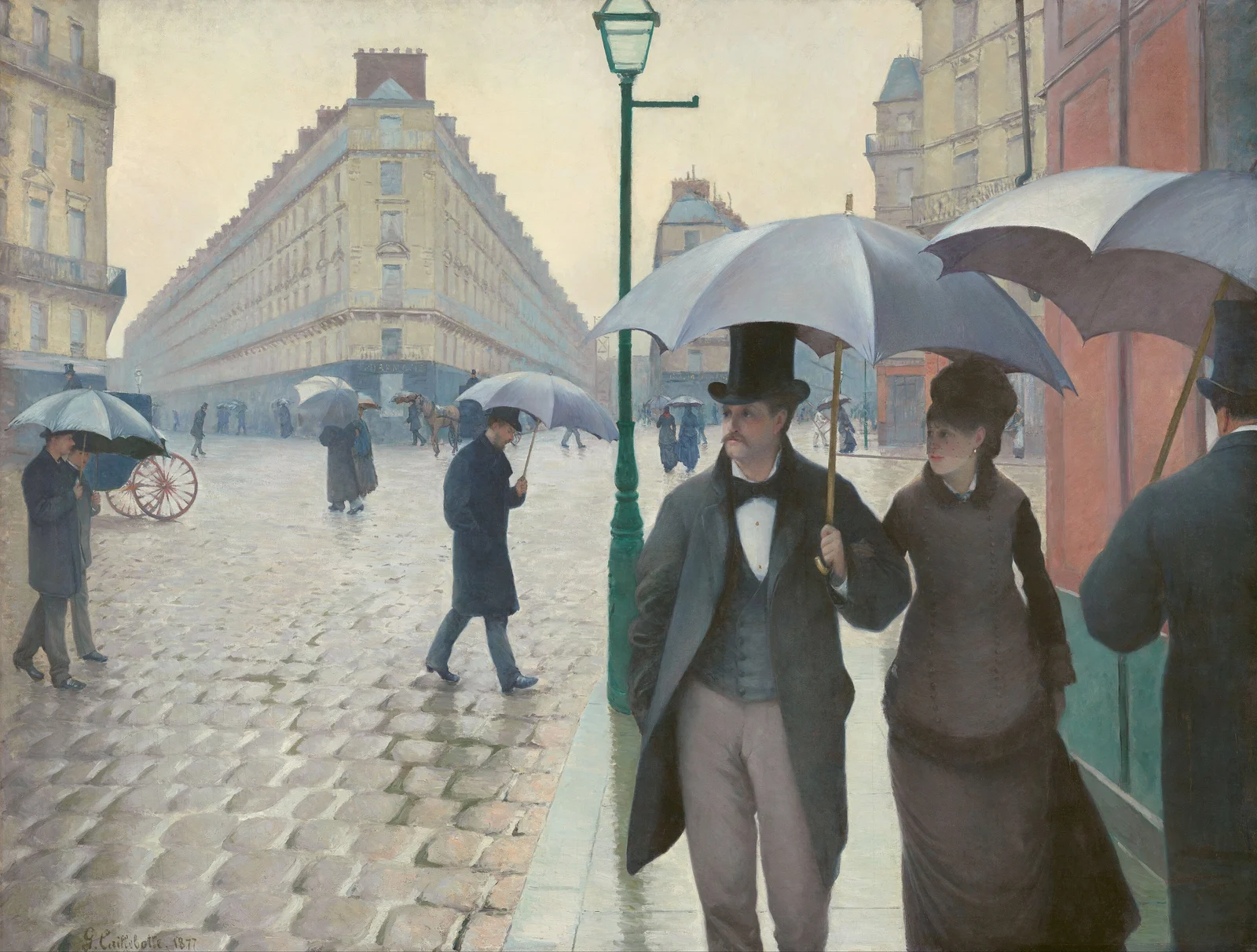
Paris Street; Rainy Day
Gustave Caillebotte (1877)
Standing at the crossroads of French Impressionism and modernist realism, this monumental work chronicles the psychological experience of the newly redesigned nineteenth-century metropolis. Engineered with rigorous two-point perspective and bold photographic cropping, the composition bisects the canvas vertically to create cinematic tension between urban proximity and modern anonymity. Across the foreground, subtle tonal gradations of pearl-gray, ochre, and slate capture the exact optical diffusion of overcast light reflecting off rain-slicked stone.
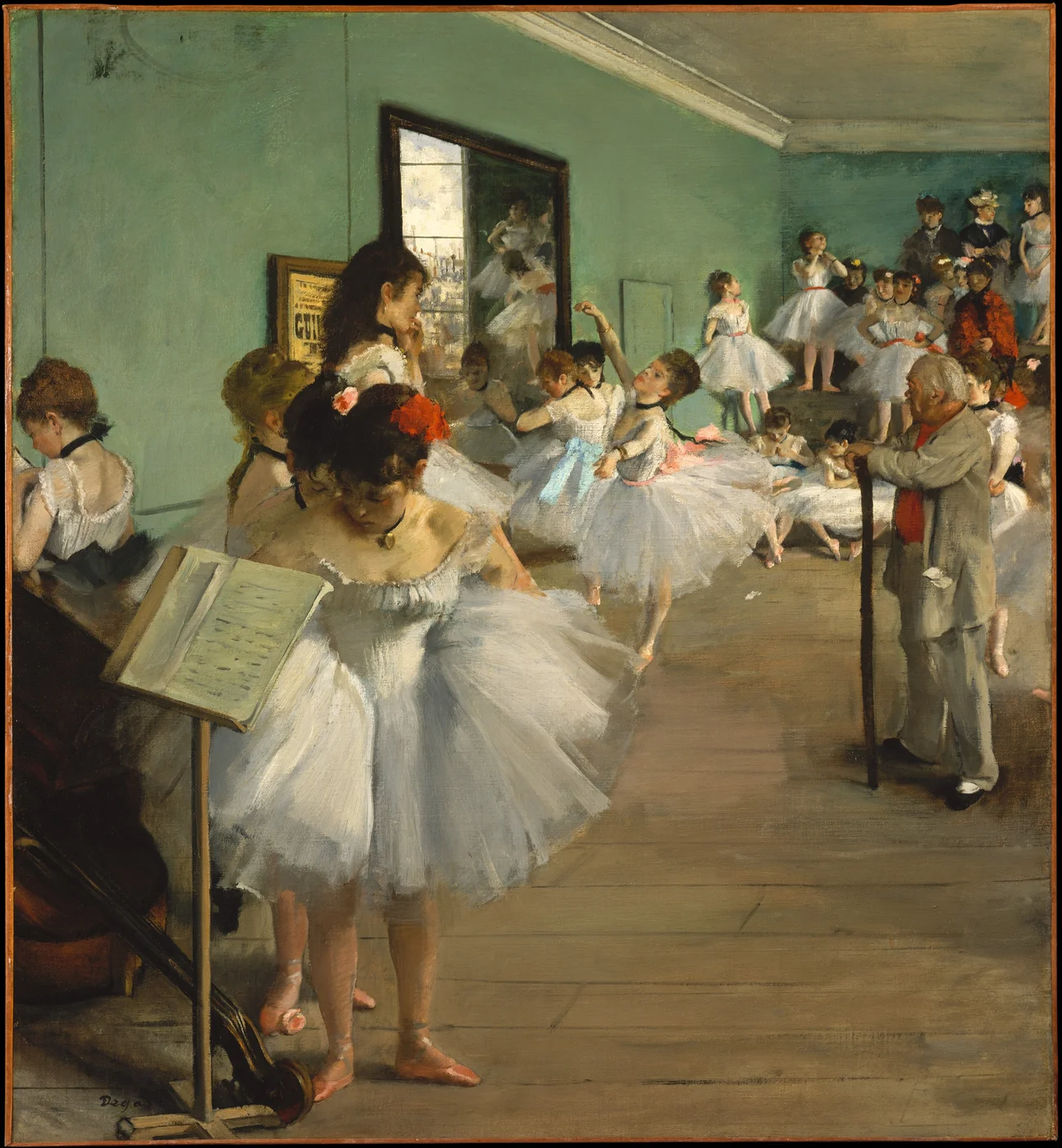
The Dance Class
Edgar Degas (1874)
A quintessential masterwork of French Impressionism, this behind-the-scenes rehearsal study traded idealized stage glamour for the candid physical discipline of the ballet studio. Guided by Japanese woodblock print design and modern photography, an asymmetrical diagonal floor and boldly cropped framing pull the viewer into a seemingly spontaneous moment of rest and adjustment. Commissioned by a celebrated Parisian opera baritone, the canvas reveals its creator’s wit by embedding a violinist’s music case in the foreground as a tribute to the patron’s profession.
Have another favorite painting in mind?
We can turn any archival artwork into a double-sided canvas tote bag, ceramic mug, throw pillow, hardcover journal, or ornament, complete with a custom-researched wall plaque on the back.