Romanticism & Pre-Raphaelite Masterworks
Caspar David Friedrich • John William Waterhouse • Eugène Delacroix • Emanuel Leutze
Against the cool logic of the Enlightenment and the soot of the Industrial Revolution, nineteenth-century Romantic and Pre-Raphaelite painters turned toward wild landscapes, revolutionary barricades, and tragic poetry. They built canvases meant to make your pulse quicken or leave you standing in quiet awe.
These four paintings capture four distinct corners of that movement: Caspar David Friedrich’s lone hiker looking out over a sea of alpine fog, Eugène Delacroix’s smoky remembrance of the July 1830 Paris uprising, Emanuel Leutze’s dramatic staging of the 1776 Delaware River crossing, and John William Waterhouse’s lush painting of Alfred, Lord Tennyson’s Arthurian ballad.
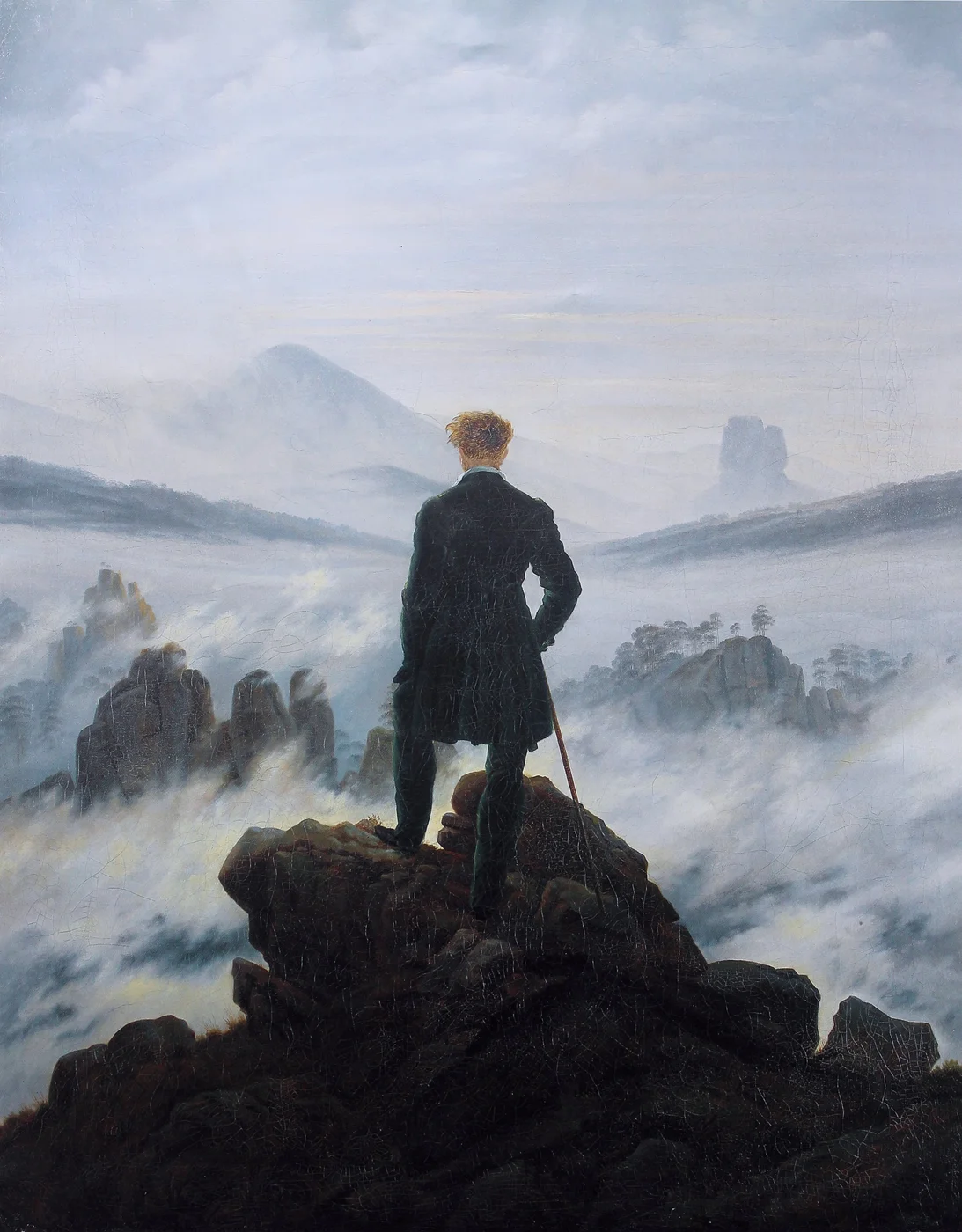
Wanderer above the Sea of Fog
Caspar David Friedrich (1818)
Standing as the supreme emblem of German Romanticism, this visionary canvas transformed landscape painting into a profound mirror of human solitude and spiritual longing. Anchored by the classic Rückenfigur motif, a solitary figure seen from behind stands at the exact intersection of converging diagonal ridgelines, inviting the viewer to share his elevated gaze. Rather than depicting a single literal vista, the scene synthesizes multiple sketched peaks from the Elbe Sandstone Mountains into a sublime architecture of mist and contemplation.
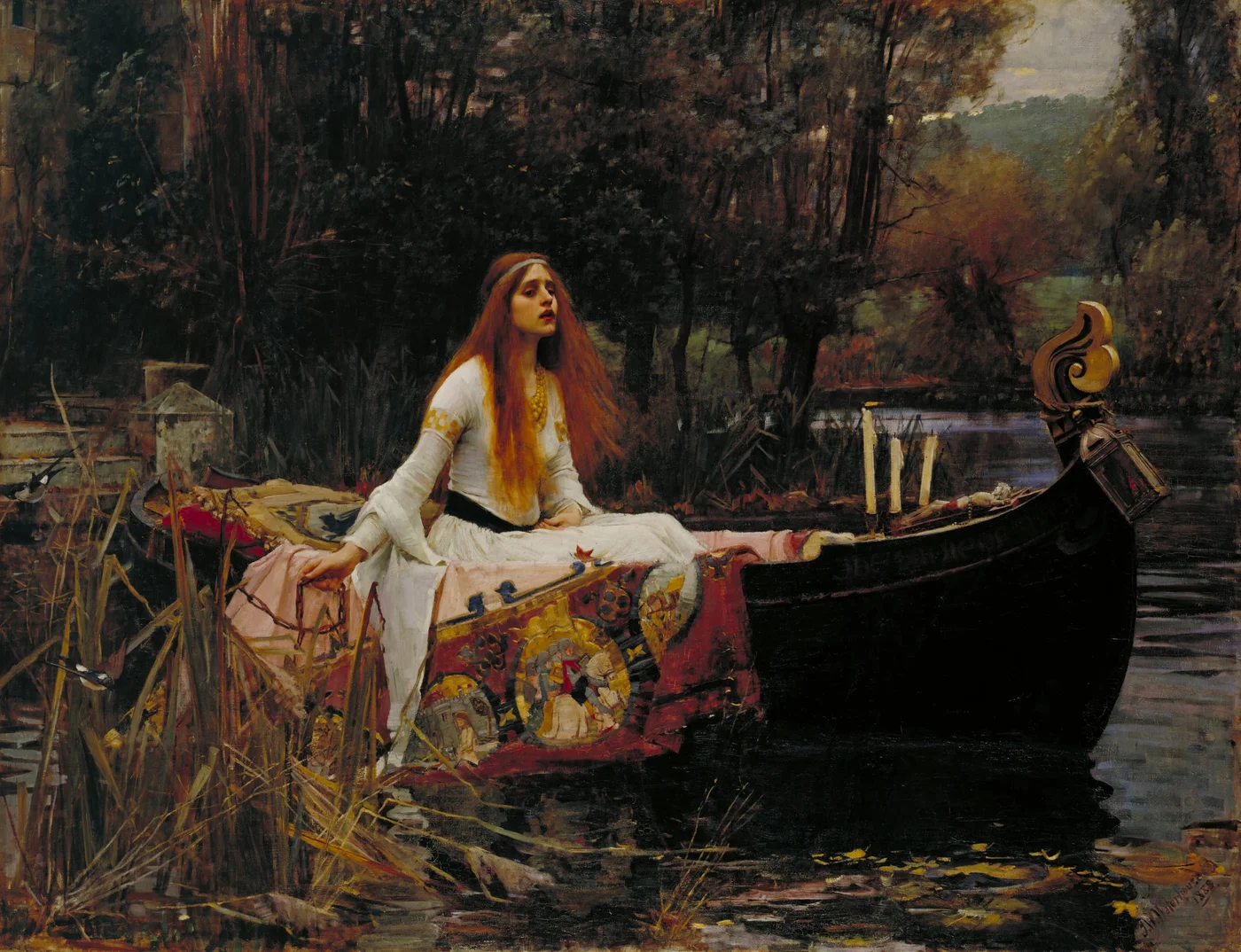
The Lady of Shalott
John William Waterhouse (1888)
An enduring masterwork of the Pre-Raphaelite Brotherhood tradition, this poignant canvas brings Victorian Arthurian poetry to life with theatrical immediacy and psychological depth. Framing the doomed weaver as she casts off her mooring chain, the composition contrasts rich medieval tapestry textures against the hushed stillness of an autumn river. Departing from strict academic finish, the artist fused French plein-air naturalism in the windswept reeds with symbolic detail, where two extinguished candles leaving a single flame signal life’s final voyage.
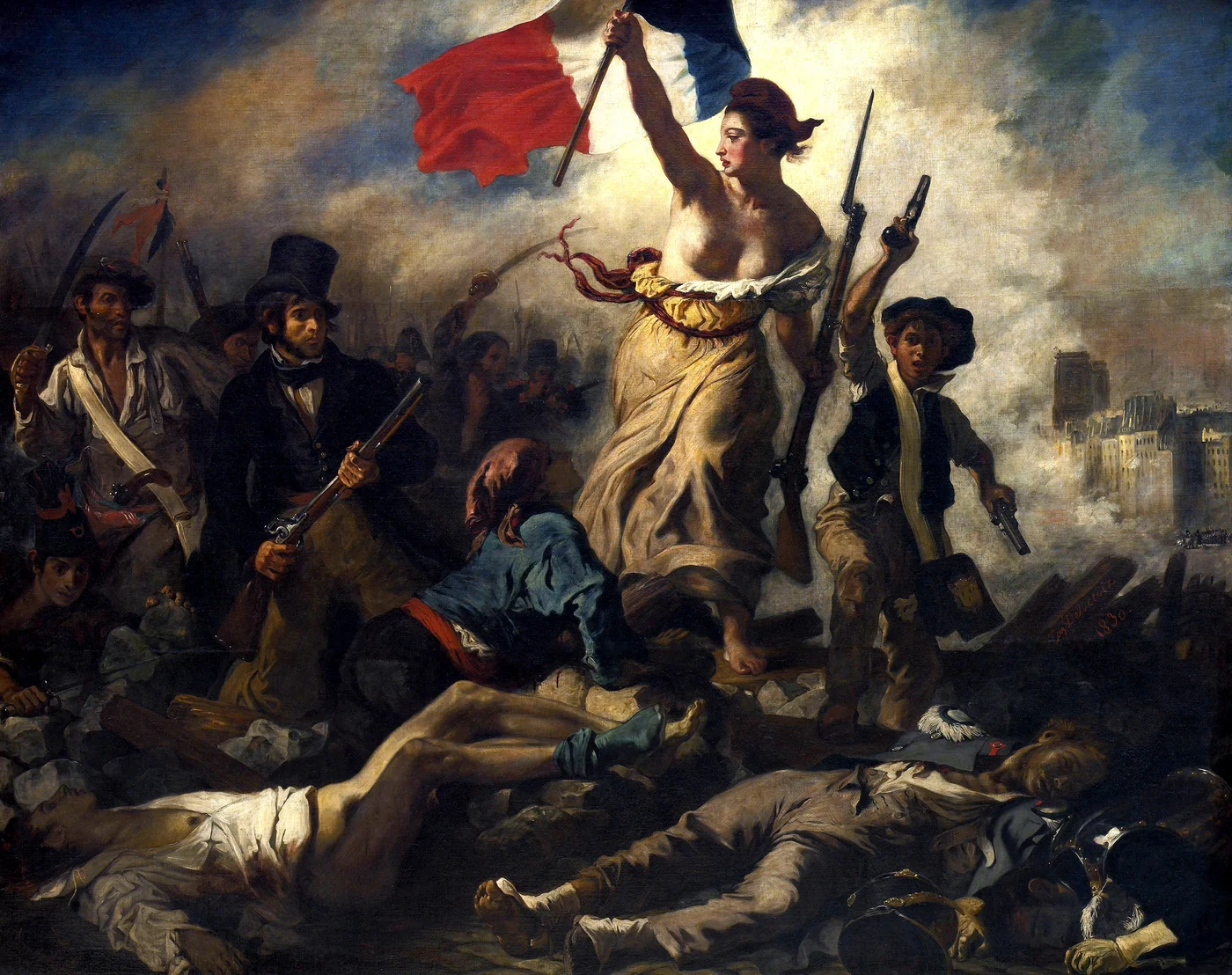
Liberty Leading the People
Eugène Delacroix (1830)
A defining monument of French Romanticism, this impassioned canvas immortalized the July Revolution of 1830 by fusing classical allegory with urgent eyewitness street reportage. Built upon a soaring pyramidal structure, the composition unites citizens across social classes as they surge forward over the stone barricades toward the viewer. Punctuating the smoky grisaille of battle, audacious tri-color accents of crimson, white, and cobalt echo from the raised banner down to a fighter’s shirt, while the ancient Phrygian cap crowns freedom’s triumph.
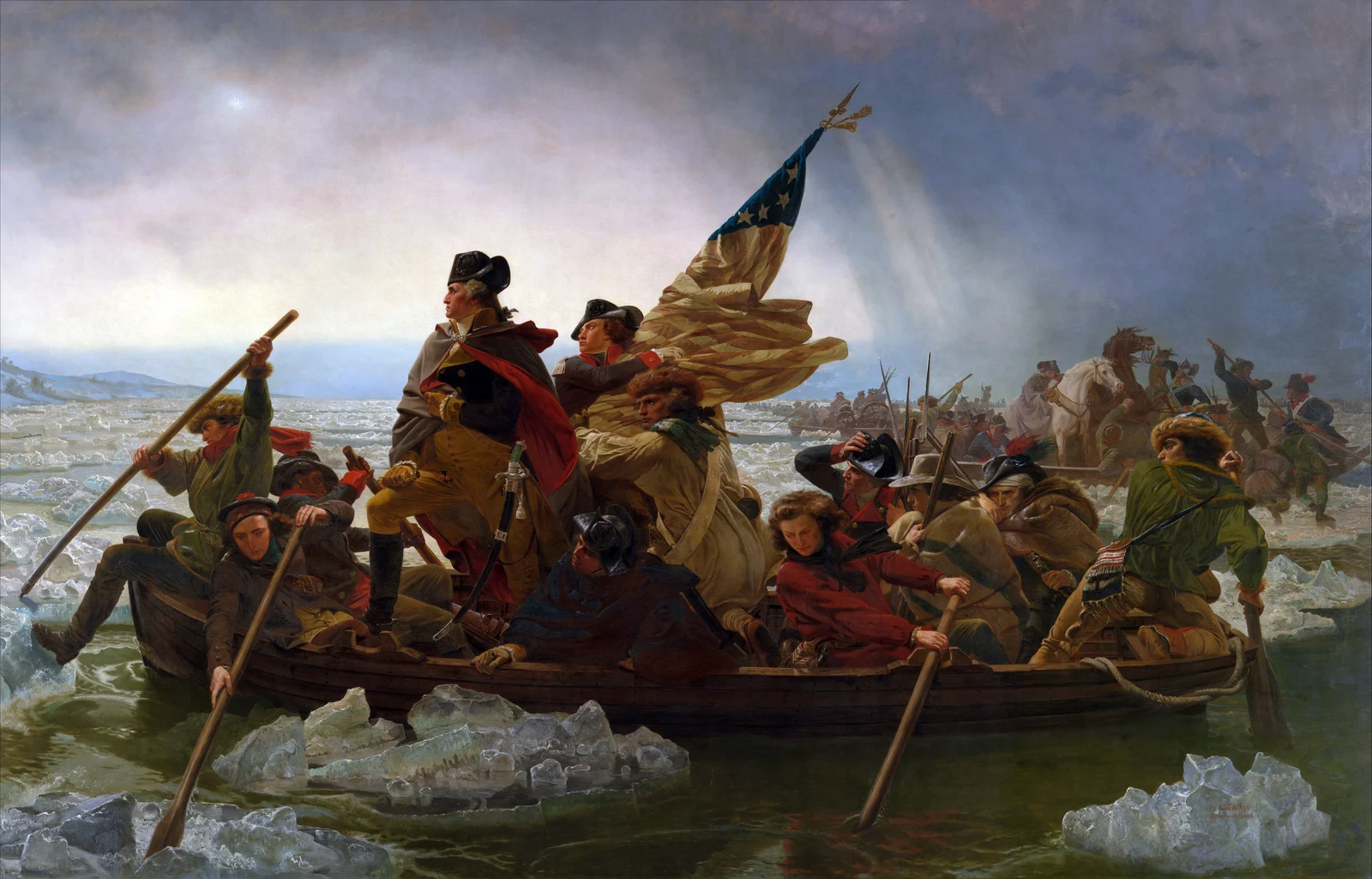
Washington Crossing the Delaware
Emanuel Leutze (1851)
Standing as a monumental triumph of Romantic history painting, this work transformed the visual language of courage and democratic resolve. Trained in the theatrical Düsseldorf school, the composition uses a steep pyramidal structure and cinematic diagonal thrust to pull the viewer directly into the perilous current. Rather than depicting the actual midnight snowstorm, dramatic chiaroscuro parts the clouds around the glowing morning star, using artistic license to turn a desperate winter gamble into an eternal emblem of hope.
Have another favorite painting in mind?
We can turn any archival artwork into a double-sided canvas tote bag, ceramic mug, throw pillow, hardcover journal, or ornament, complete with a custom-researched wall plaque on the back.