Post-Impressionism & Neo-Impressionism Collection
Vincent van Gogh • Georges Seurat • Henri Rousseau (1884–1897)
By the mid-1880s, a younger generation of artists in France wanted to keep the bright, sunlit palette of Impressionism without sacrificing solid structure or deeper personal meaning. Rather than simply recording what the eye saw in a split second, they used color and line to build worlds of their own.
You can see three very different answers to that challenge across these seven works: Georges Seurat spending two years placing tiny dots of pure pigment side by side on La Grande Jatte based on optical physics; Vincent van Gogh loading his brush with heavy impasto in Provence; and self-taught toll collector Henri Rousseau conjuring a silent, moonlit desert straight from his imagination.
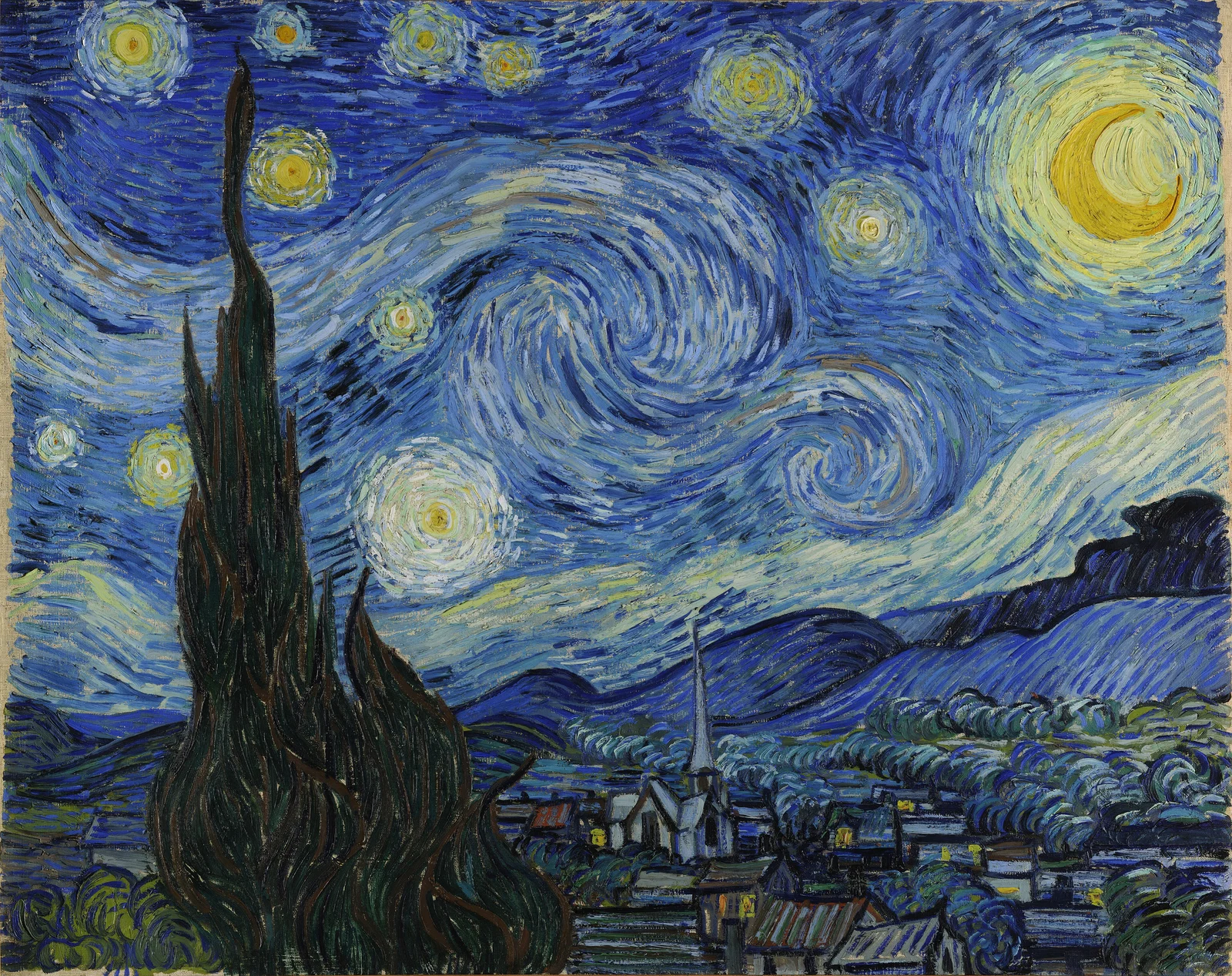
The Starry Night
Vincent van Gogh (1889)
Universally celebrated as the apex of Post-Impressionism, this nocturnal vision redefined painting as an expression of inner emotion rather than literal observation. Merging direct outdoor studies with memory and spiritual imagination, the composition pairs Southern French hills with a northern Dutch steeple to bridge earthly stillness and cosmic infinity. Applied in sculptural, rhythmic impasto straight from the tube, luminous ultramarine and Indian yellow strokes make the night sky physically pulse with movement and light.
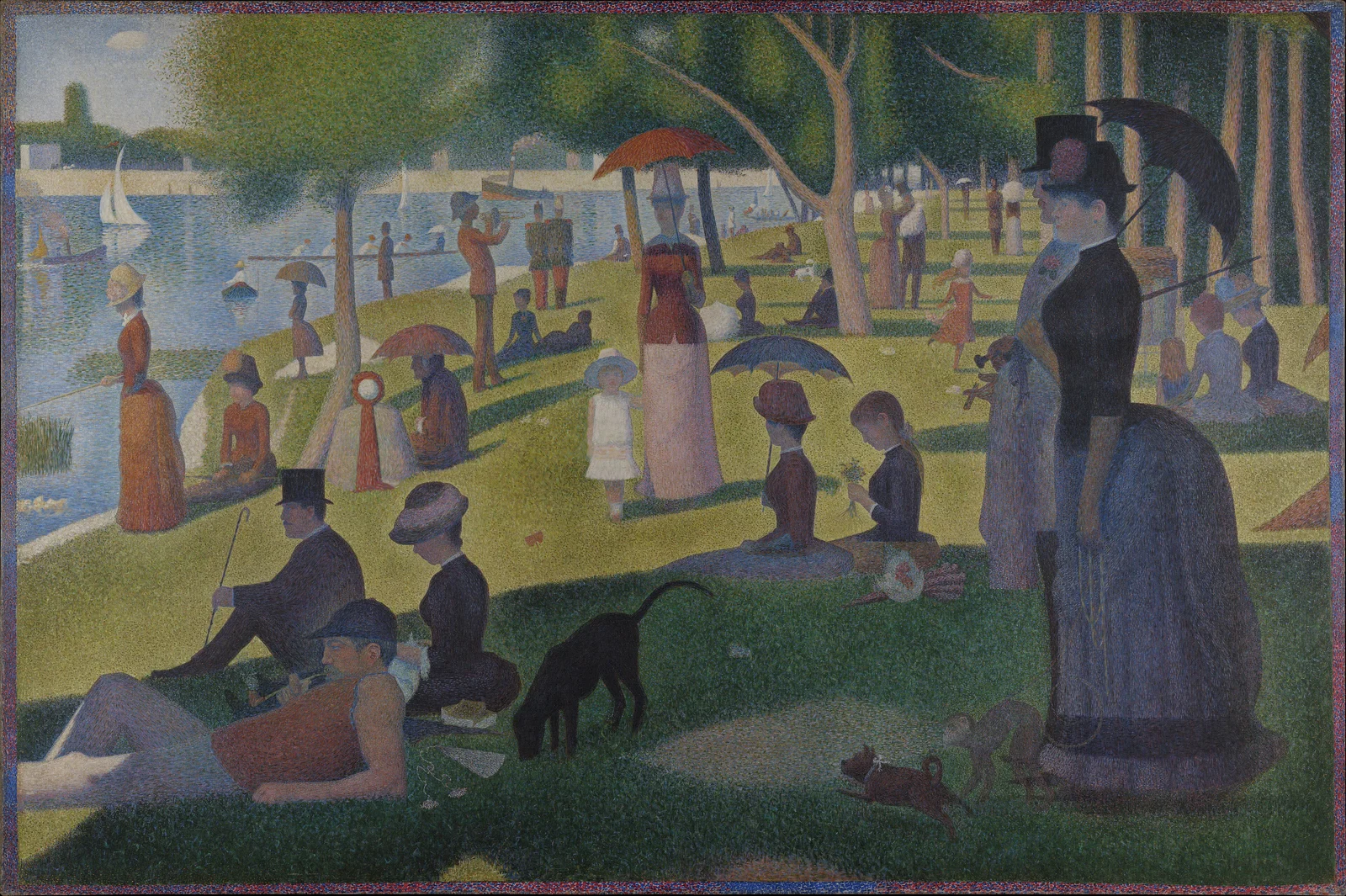
A Sunday on La Grande Jatte
Georges Seurat (1884–1886)
This revolutionary monument of Neo-Impressionism forever changed modern art by fusing classical frieze-like grandeur with nineteenth-century scientific color theory. Rejecting traditional palette mixing, the entire canvas is constructed from thousands of precision pointillist dots of pure, unblended pigment. Viewed from a distance, the human retina performs optical mixing, causing complementary hues to vibrate with a luminosity no brush-mixed paint could achieve, right out to the hand-painted pointillist border framing the scene.
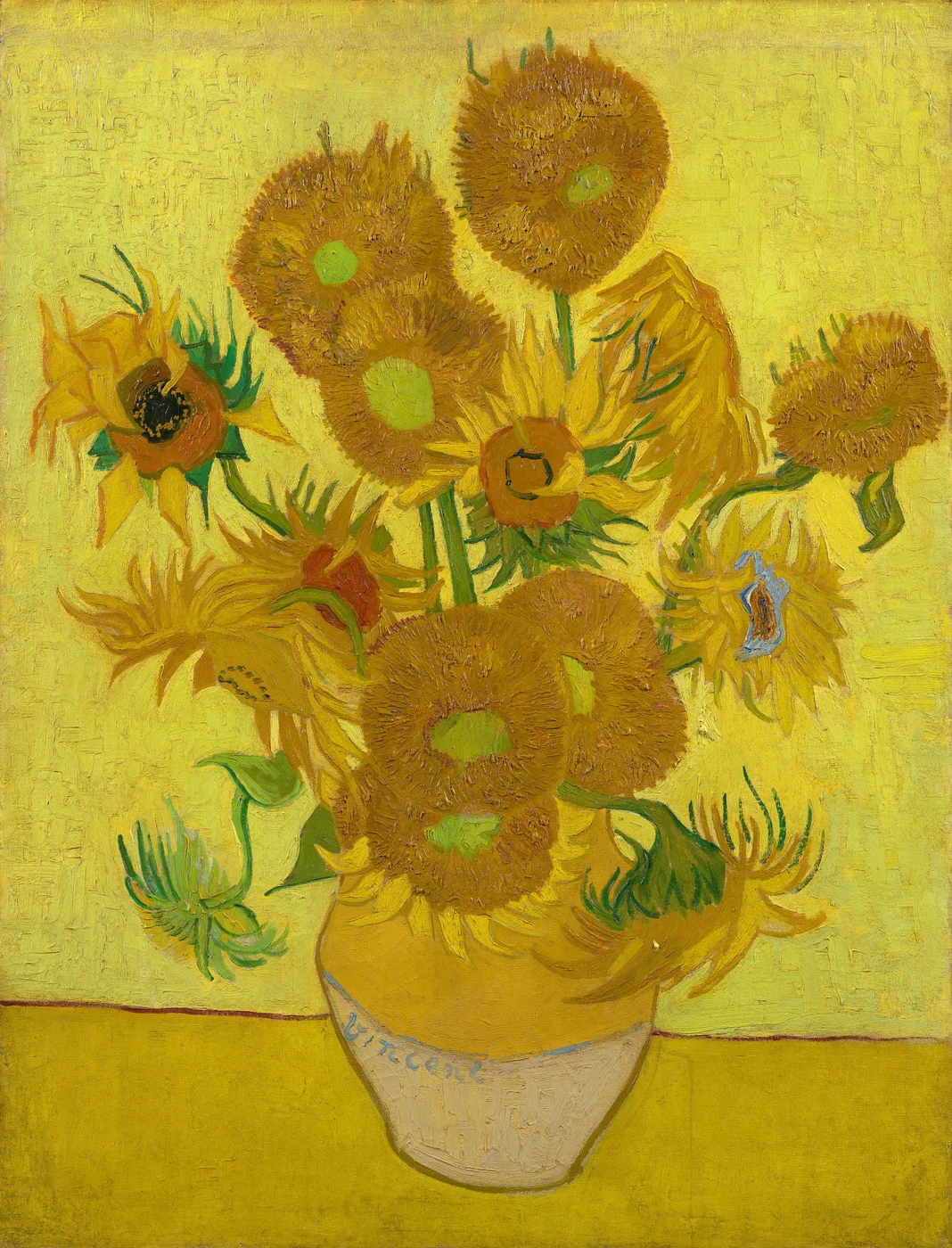
Sunflowers
Vincent van Gogh (1889)
Revered as a radiant touchstone of Post-Impressionism, this jubilant still life transformed a humble botanical subject into a timeless symbol of gratitude, vitality, and creative kinship. Orchestrated as a daring symphony of yellow-on-yellow, the composition achieves remarkable spatial depth and warmth using almost no contrasting dark shadows at all. Enabled by newly invented nineteenth-century synthetic chrome yellow pigments, the artist sculpted each stage of bloom with rhythmic, high-relief impasto that makes the canvas physically glow with Provençal sunlight.
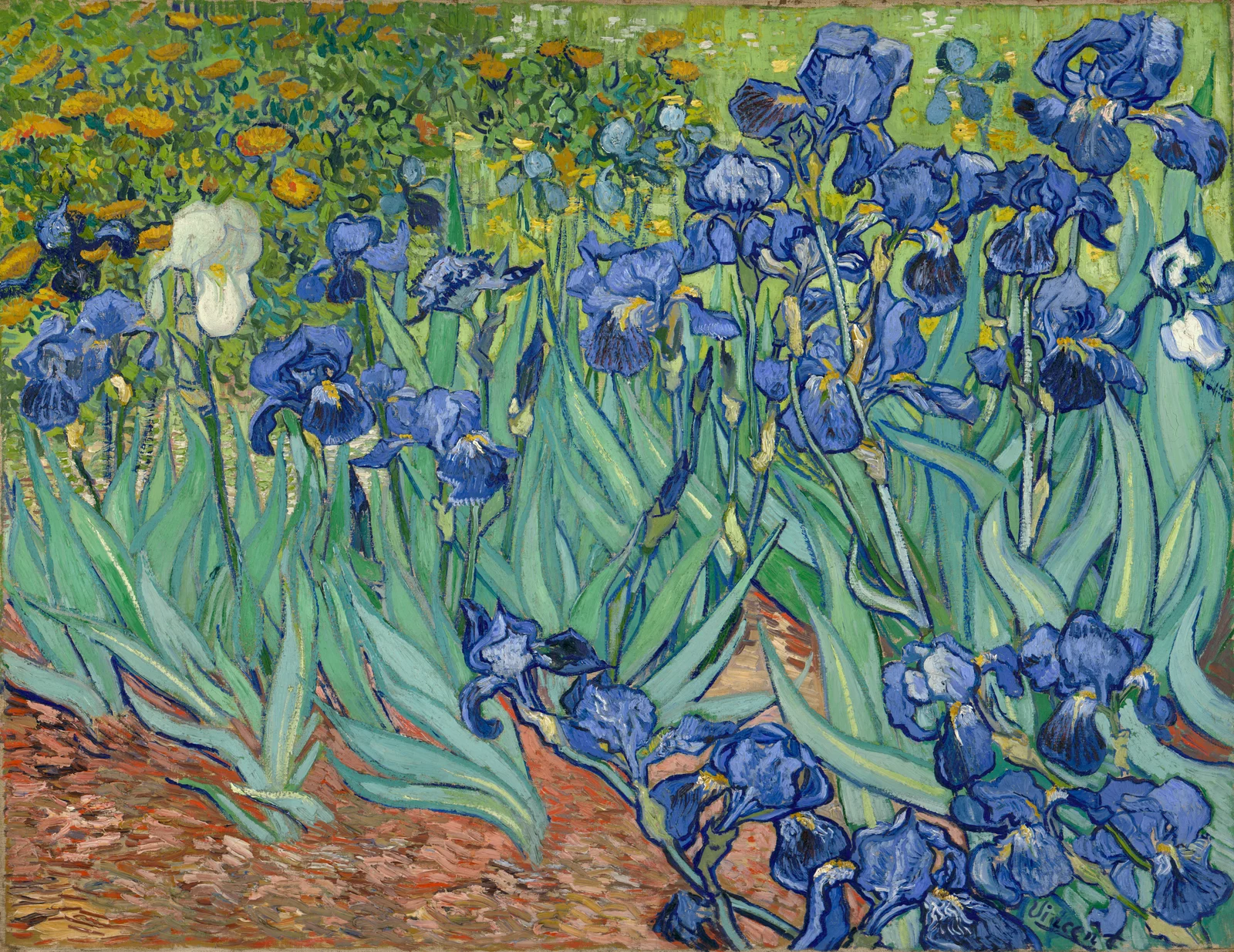
Irises
Vincent van Gogh (1889)
Conceived as what its creator called a “lightning conductor for my illness,” this Post-Impressionist triumph channels turbulent emotion into disciplined natural vitality. Heavily influenced by Japanese ukiyo-e woodblock prints, the composition eliminates the horizon entirely, using flattened spatial planes and bold sinuous outlines to immerse the viewer in living color. Conservation science later revealed that fugitive red lake pigments gradually faded over time, transforming the blossoms from their original violet into luminous cobalt blue.
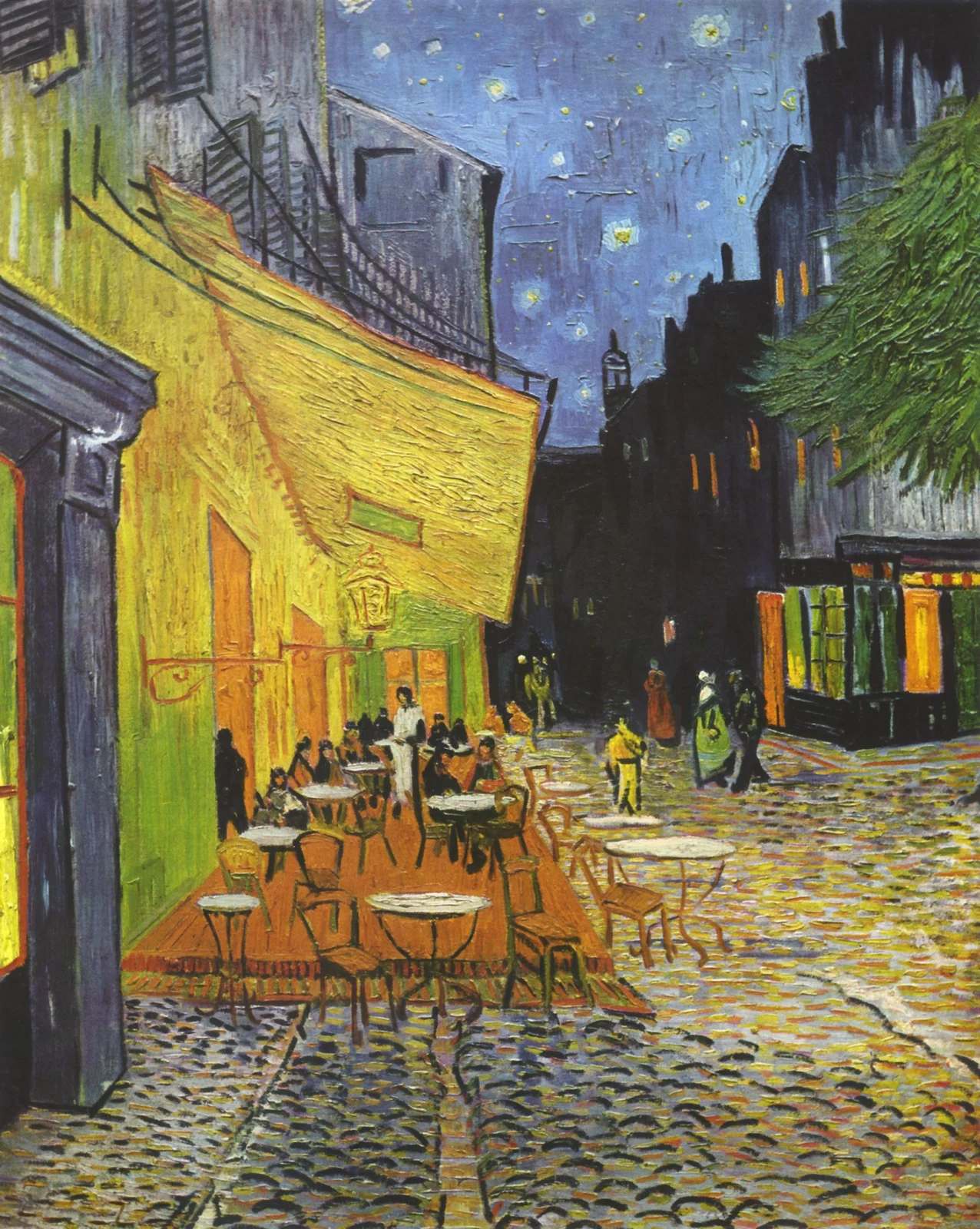
Café Terrace at Night
Vincent van Gogh (1888)
A visionary breakthrough of Post-Impressionism, this work was painted directly on site beneath the evening sky, marking a daring departure from studio tradition. Guided by complementary color theory, the composition ignites an electric dialogue between warm yellow gaslight and deep cobalt nocturnal shadows, drawing the eye down the perspective of the cobblestones. Remarkably, the entire night scene was achieved without a single drop of black paint, relying solely on contrasting pigments to make darkness glow.
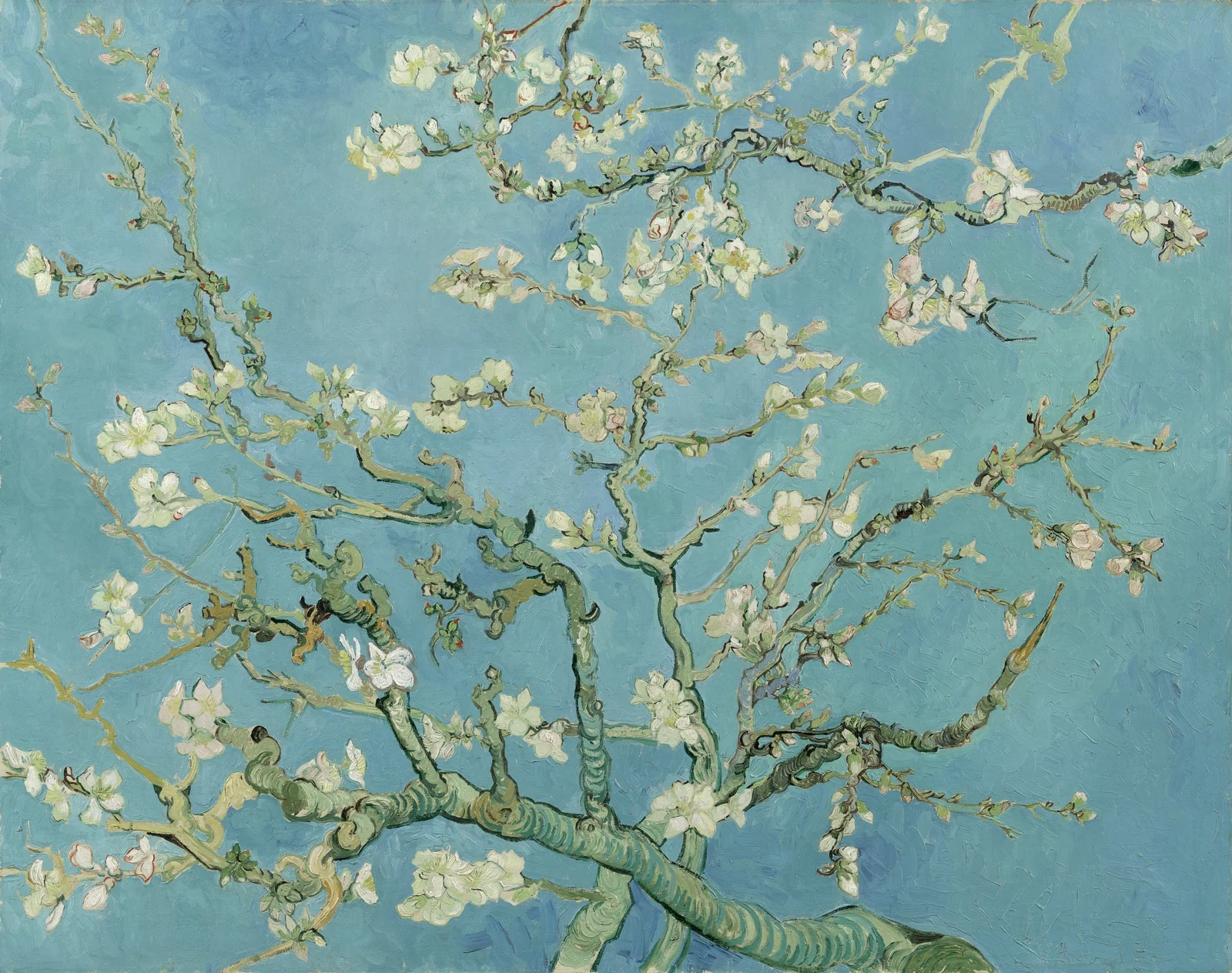
Almond Blossom
Vincent van Gogh (1890)
A deeply personal masterwork of Post-Impressionism, this radiant canvas symbolizes resilience, familial devotion, and the first awakening of spring. Drawing directly from Japanese ukiyo-e print design, the composition abandons conventional ground planes for a daring upward vantage point, flattening perspective against a luminous turquoise sky. Across the surface, bold calligraphic dark contours carve out the twisting branches, while sculpted, high-relief impasto gives each delicate blossom a tactile, three-dimensional presence.
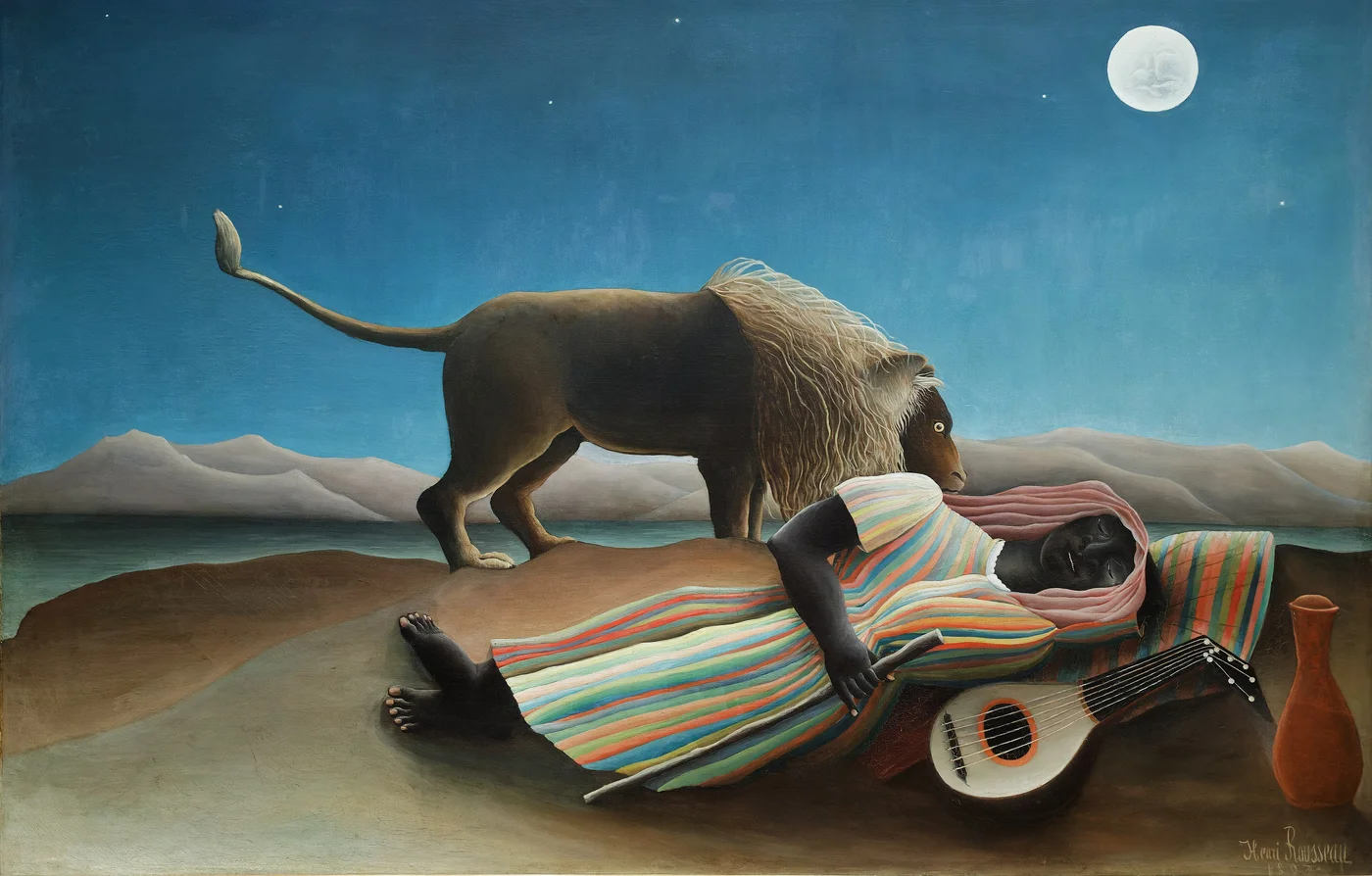
The Sleeping Gypsy
Henri Rousseau (1897)
Celebrated as a spellbinding triumph of Post-Impressionist Naïve art and a direct precursor to twentieth-century Surrealism, this nocturnal vision conjures a realm of pure poetic mystery. Bathed in uncanny lunar clarity, the composition balances crisp geometric color planes and a tilted perspective that suspends the sleeping musician and curious lion outside ordinary time. Rejecting academic modeling, the self-taught artist applied smooth, unblended oil glazes and rhythmic striped contours to create an enigmatic dreamscape that captivated modern vanguard painters.
Have another favorite painting in mind?
We can turn any archival artwork into a double-sided canvas tote bag, ceramic mug, throw pillow, hardcover journal, or ornament, complete with a custom-researched wall plaque on the back.