The Dutch Golden Age (1642–1665) Collection
Johannes Vermeer • Rembrandt van Rijn • Delft & Amsterdam
In the seventeenth-century Dutch Republic, a booming merchant economy and a Protestant skepticism toward grand church altarpieces changed who bought paintings and what those paintings showed. In towns like Delft and Amsterdam, artists painted for private homes and civic halls, turning quiet kitchens, expressive character studies, and local militia companies into subjects of extraordinary dignity.
This three-work collection pairs Johannes Vermeer’s Girl with a Pearl Earring and The Milkmaid with Rembrandt van Rijn’s monumental The Night Watch. Together they show how Vermeer’s costly crushed lapis lazuli glazes and tiny dots of light contrast with Rembrandt’s theatrical shadow and forward motion.
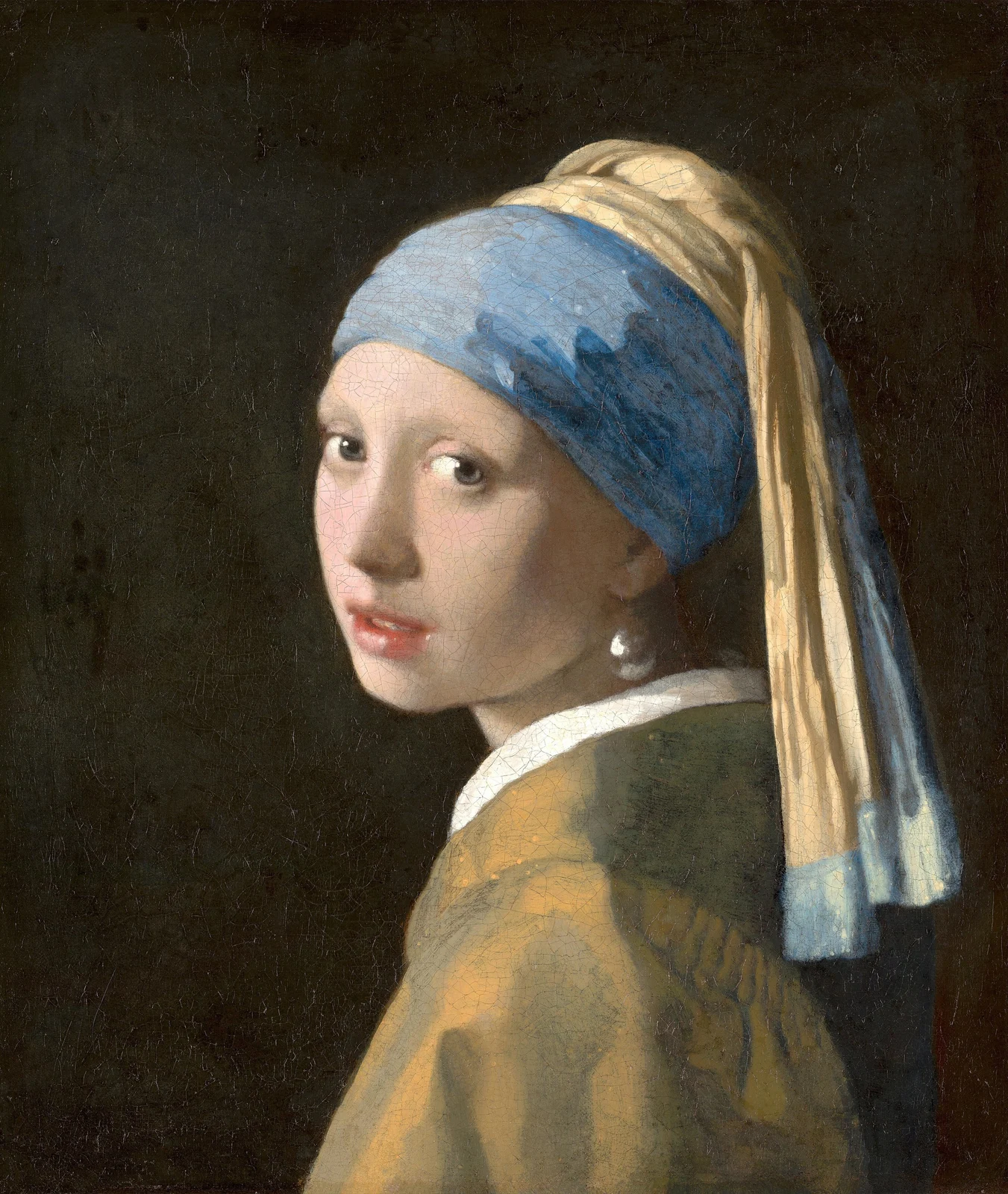
Girl with a Pearl Earring
Johannes Vermeer (1665)
Hailed as the “Northern Mona Lisa,” this crowning tronie of the Dutch Golden Age revolutionized how Western art captures light and human presence. Rather than a formal commissioned portrait, the canvas arrests a suspended fraction of a second, using velvety chiaroscuro and rare lapis lazuli glazes to forge an unguarded bond with the viewer. Technical imaging confirmed its audacious optical illusion: the pearl possesses no contour hook or outline, conjured instead by two floating brushstrokes of lead-white paint.
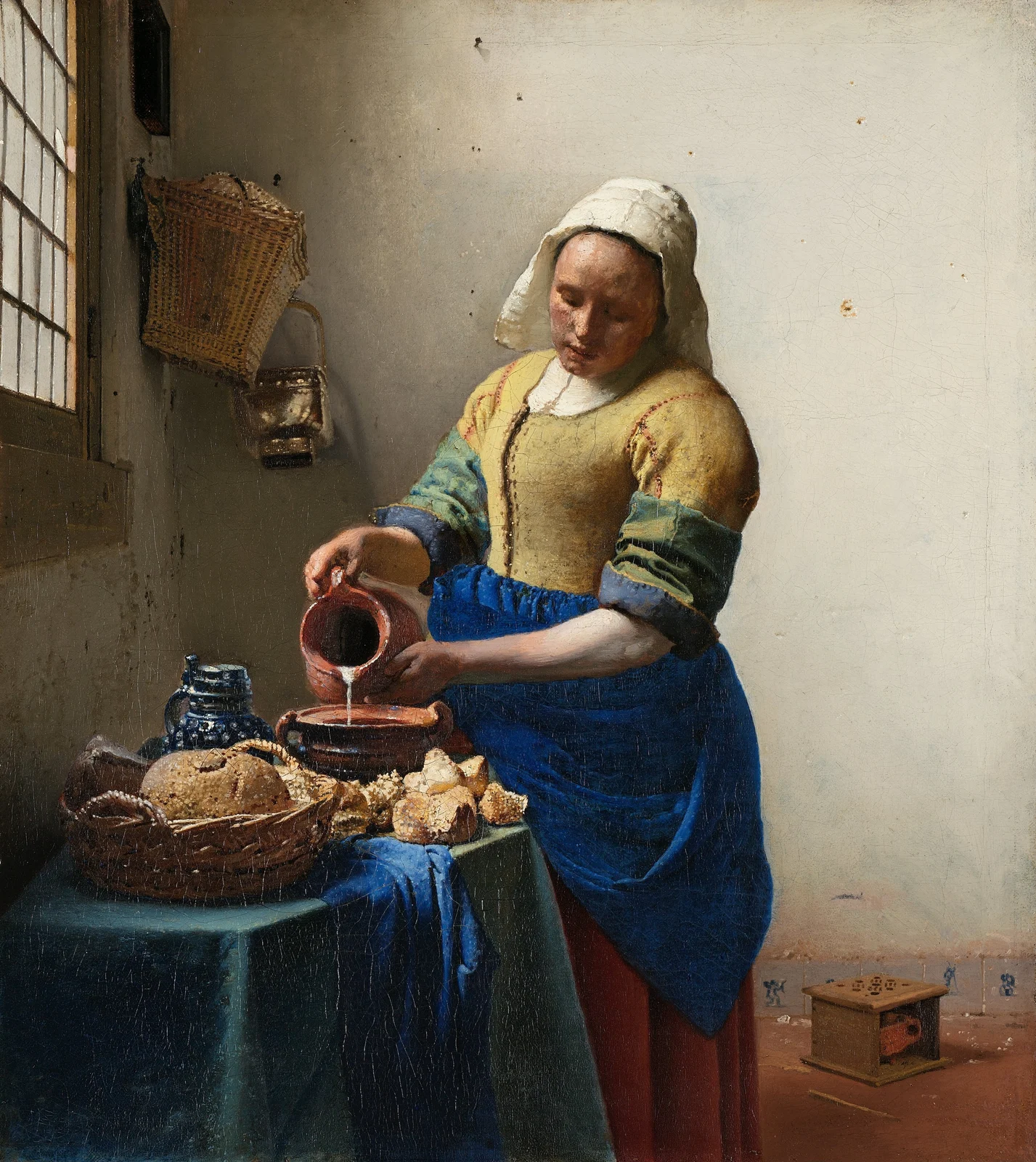
The Milkmaid
Johannes Vermeer (1658)
Revered as a quiet triumph of the Dutch Golden Age, this intimate domestic study elevates humble daily labor into timeless monumentality. A low vantage point and pinhole-guided linear perspective lend the figure heroic dignity, while cool daylight anchors the room in hushed stillness. Lavish natural ultramarine from crushed lapis lazuli pairs with warm lead-tin yellow, while raised pointillé dots of light across the bread and wicker create a sparkling, tactile illusion of texture.
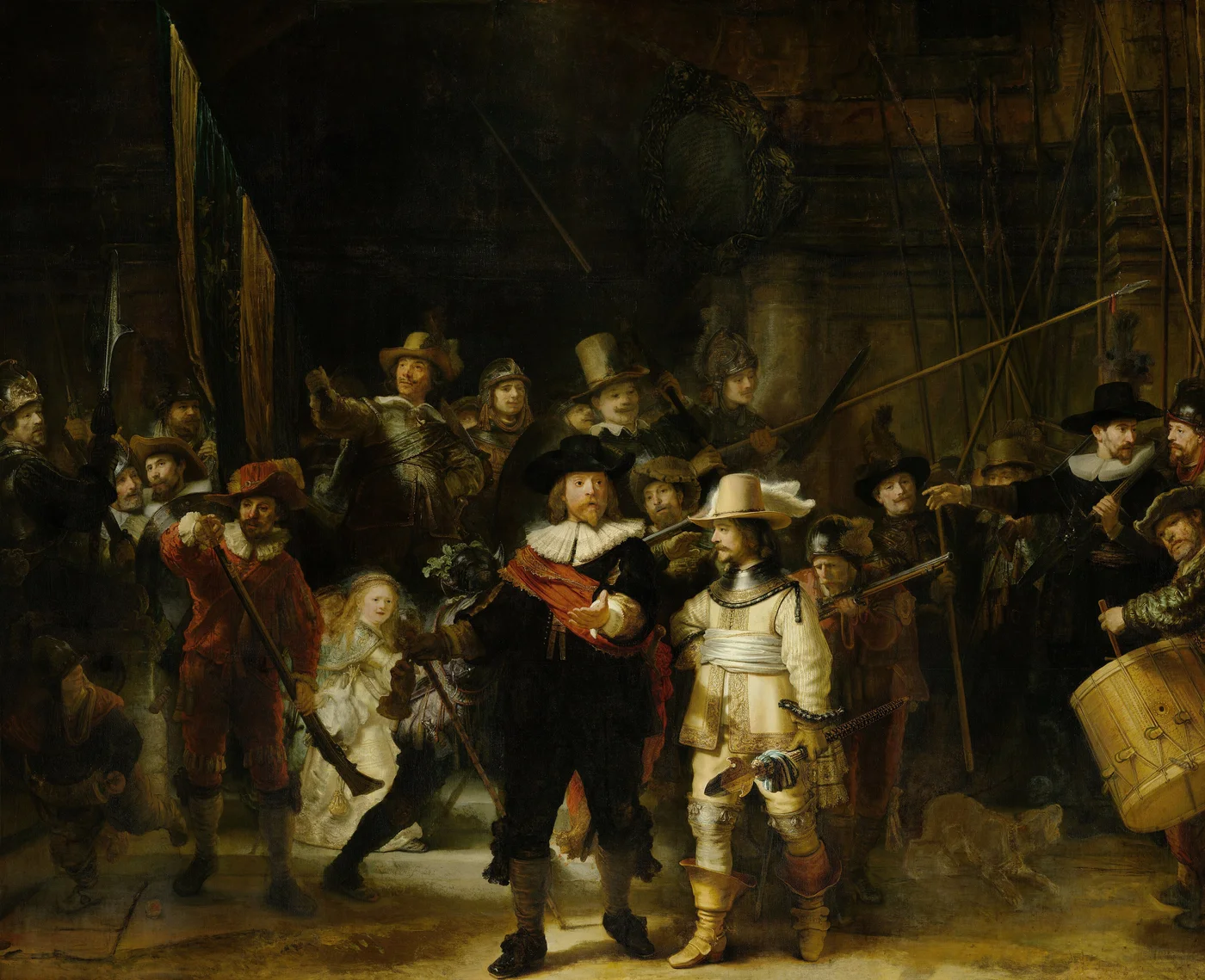
The Night Watch
Rembrandt van Rijn (1642)
Universally acclaimed as the supreme masterpiece of the Dutch Golden Age, this monumental civic-guard portrait shattered centuries of static group-portraiture convention. Rather than lining figures up in a rigid row, the composition stages a dramatic moment of kinetic action, using theatrical tenebrism and foreshortened halberds to project the captain’s gesture directly into the viewer’s space. Amid the shadowy muster, a radiant golden figure in the middle ground carries a white poultry bird, cleverly embodying the musketeer guild’s emblematic talons.
Have another favorite painting in mind?
We can turn any archival artwork into a double-sided canvas tote bag, ceramic mug, throw pillow, hardcover journal, or ornament, complete with a custom-researched wall plaque on the back.